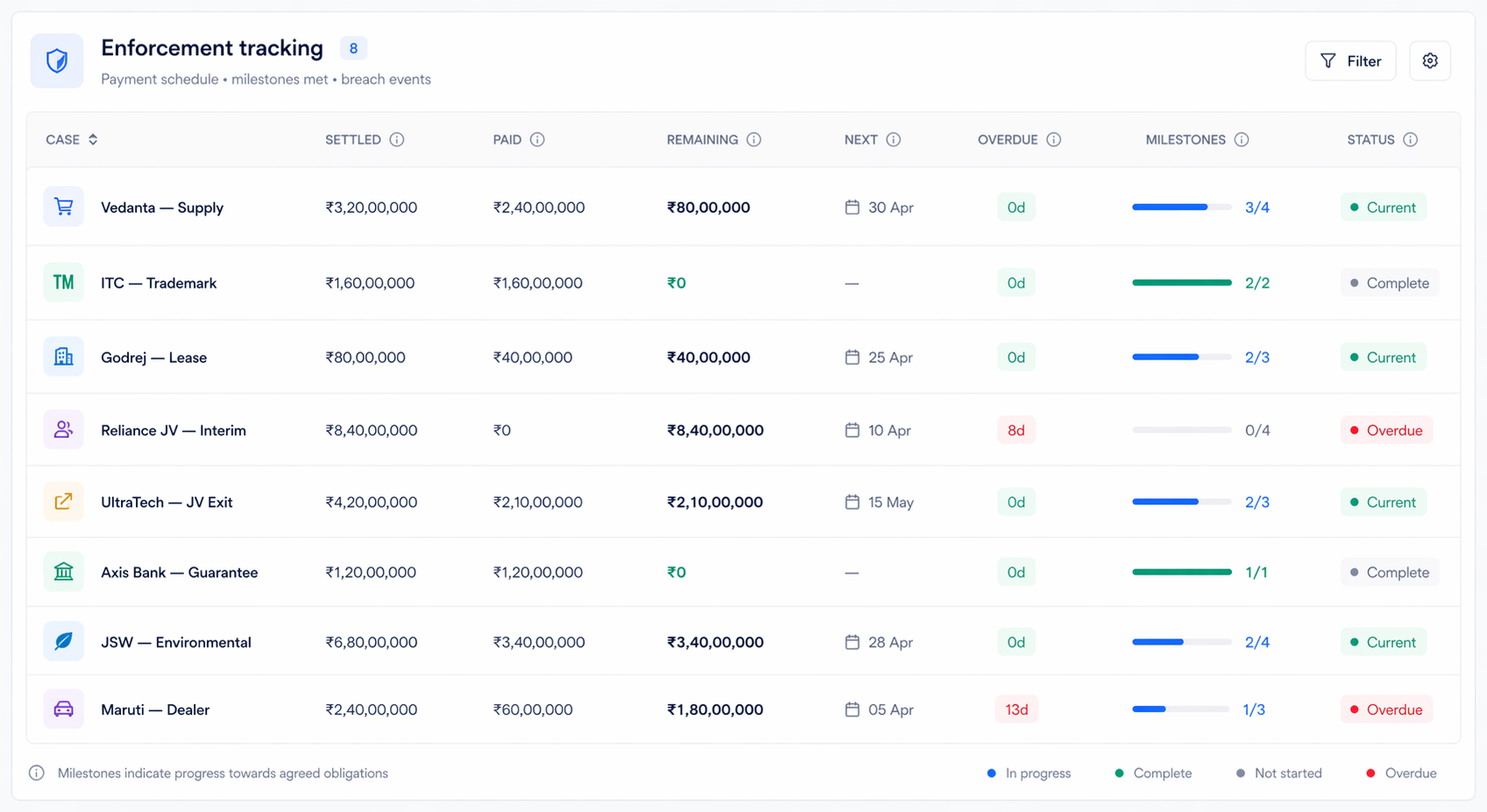
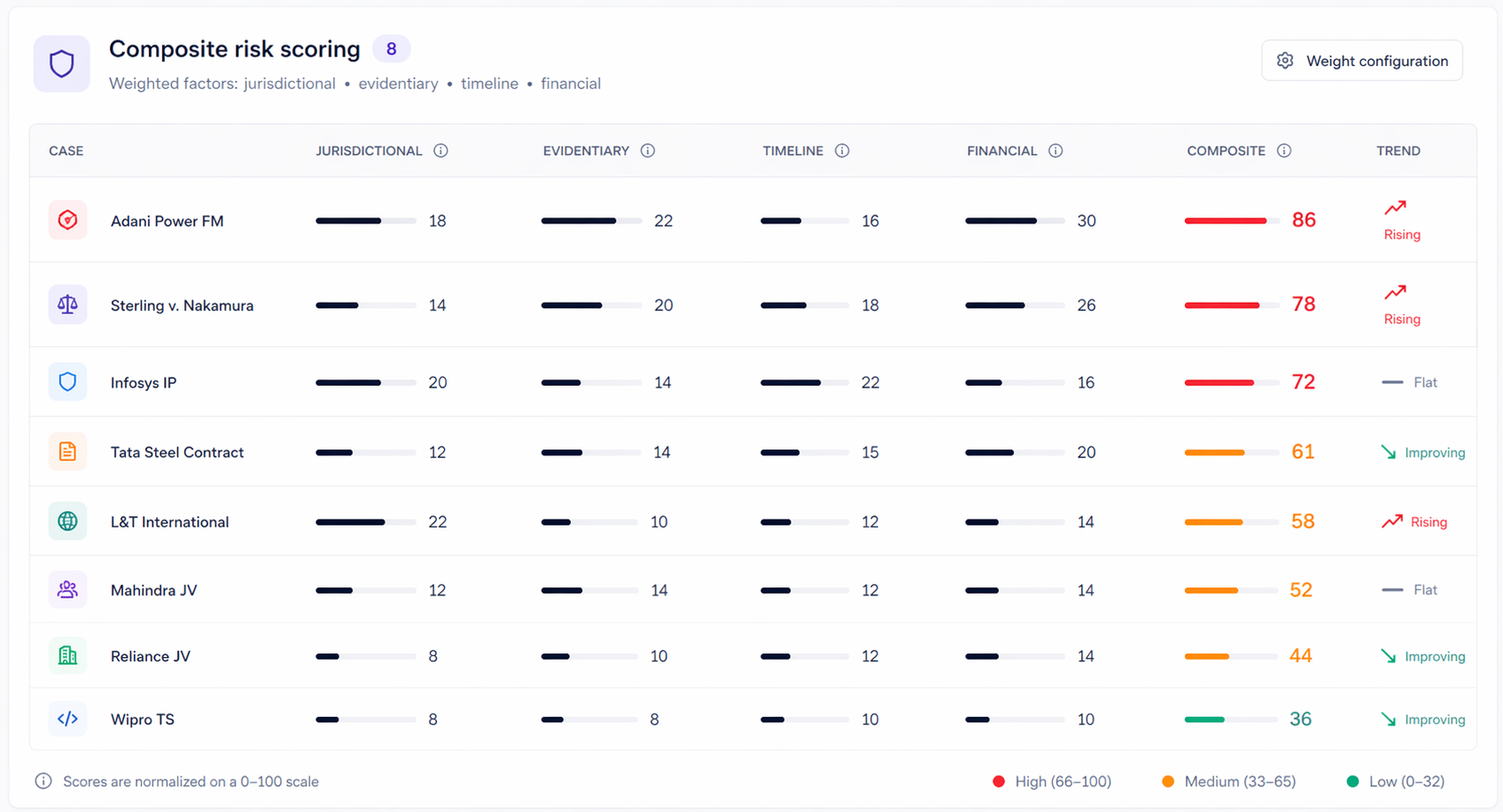
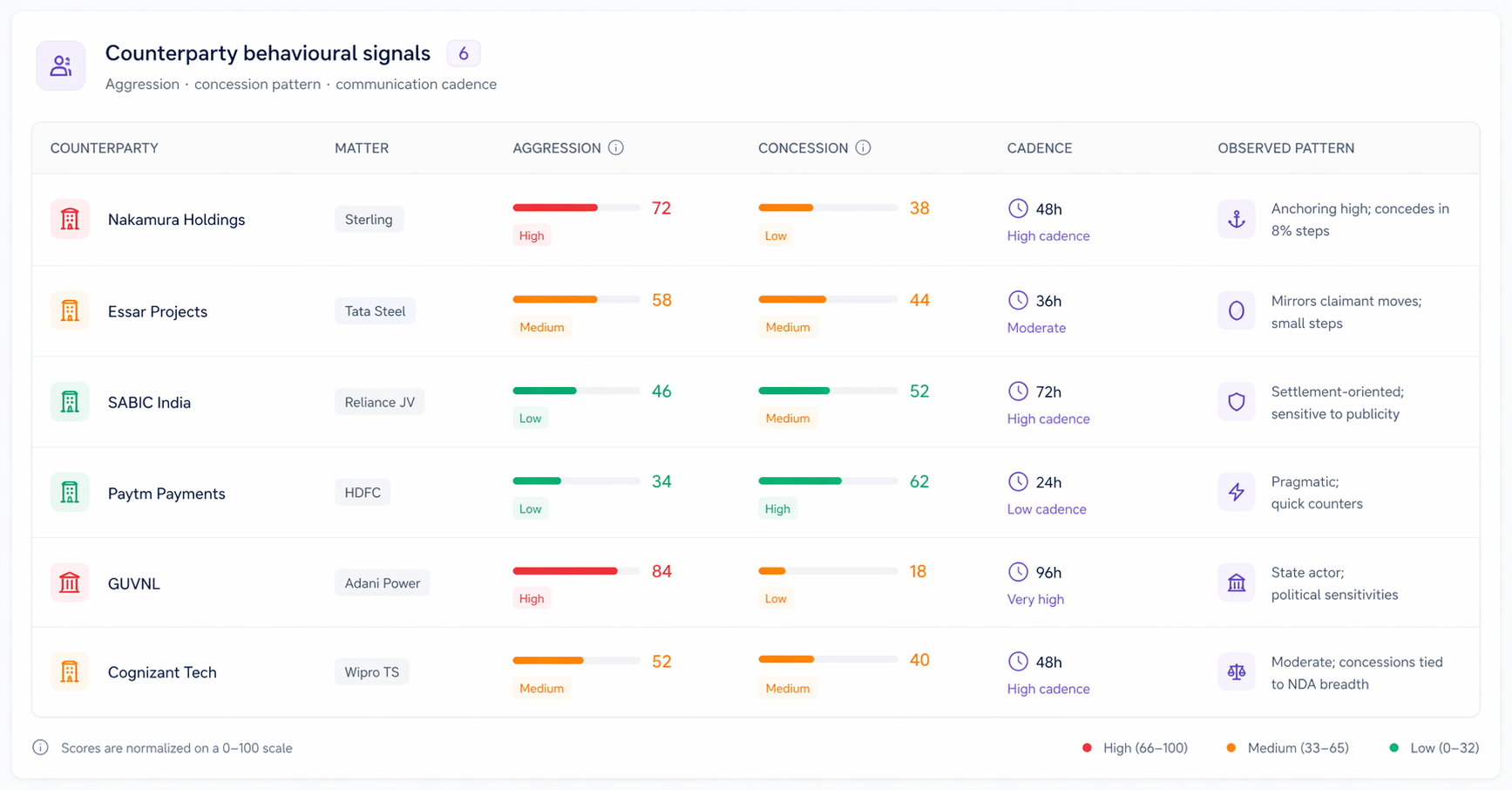
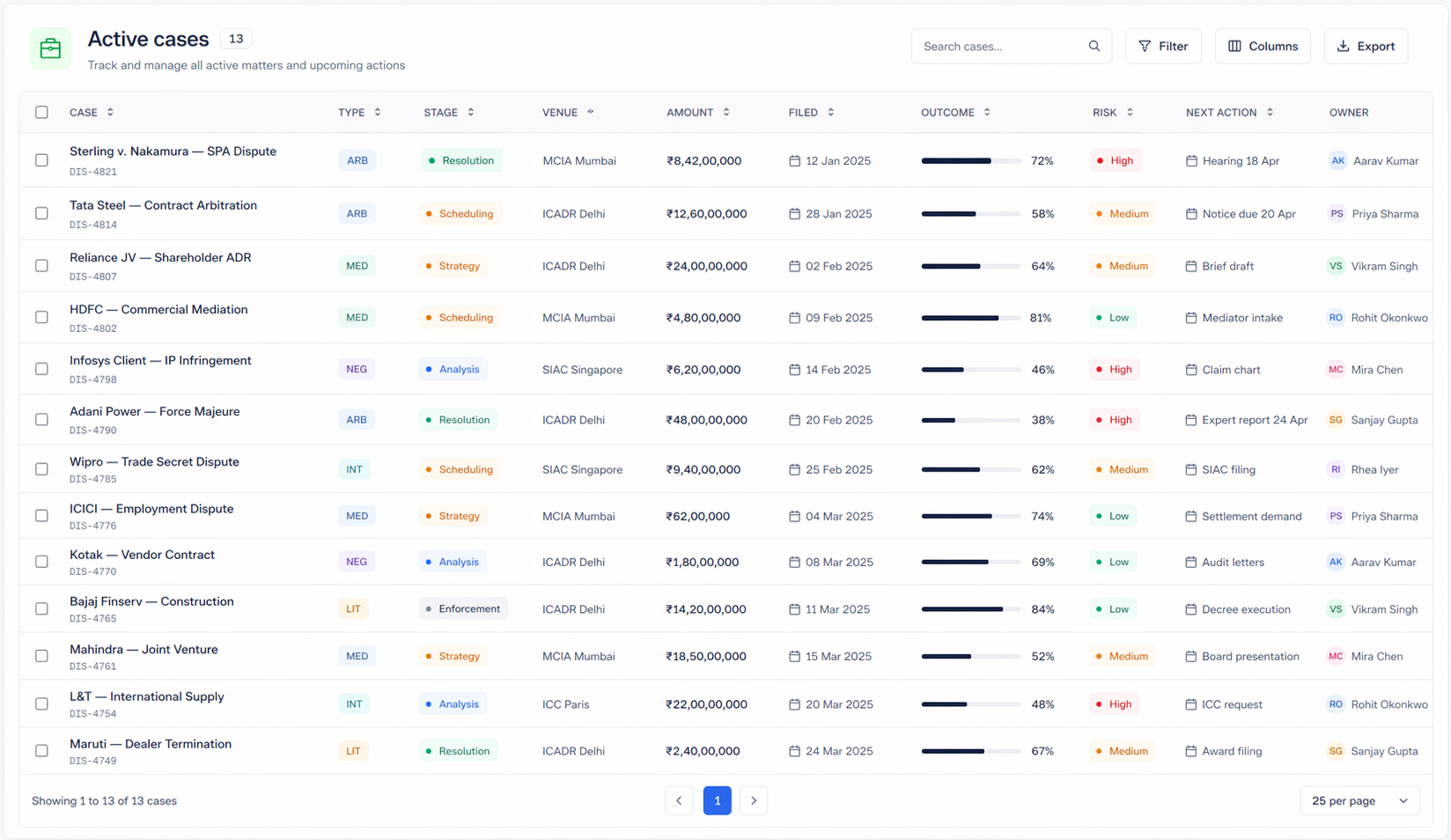
A theory is not a paragraph in the complaint. It's a structured position: elements, sub-elements, the facts that support each, the authorities that anchor each, the weaknesses a well-prepared opponent will target. Hold it explicitly in one place and every downstream decision (what to depose for, what to move on, what to concede) gets easier.
Alternative theories sit beside the primary one. When a fact changes, you see which theory it strengthens and which it breaks, before the strategy call instead of during it.
- Element-by-element theory mapping
- Fact-to-element and authority-to-element linking
- Weakness and counter-theory tracking
- Live strategy artifact the whole team reads from