Solution · ADR
Arbitration and mediation,
prepared like the high-stakes work it is.
For counsel, arbitrators, and mediators across commercial, construction, investor-state, and institutional ADR. Procedural orders drafted. Record organised. Authorities cited. Rehearsal done before the hearing.
The forum
ADR has its own grammar. Your AI should speak it.
Arbitration and mediation aren't mini-trials. Institutional rules, procedural orders, tribunal schedules, multiple jurisdictions and languages in a single matter. Default legal AI assumes a court. It misses what makes ADR ADR.
Our ADR configuration knows the rulebooks you actually work under: ICC, LCIA, SIAC, HKIAC, ICSID, AAA, JAMS, UNCITRAL, CIArb. It reads Terms of Reference, tracks timetables, and shapes the record the way the tribunal wants it.
Who this is for
For everyone who works the ADR forum.
Claimant and respondent teams running complex commercial, construction or investor-state arbitrations across institutional and ad hoc regimes.
Sole arbitrators and three-member tribunals managing record, deliberating issues and drafting awards with full authority mapping.
Commercial and community mediators preparing case theory, BATNA/WATNA analysis and settlement-zone framing before sessions.
Registries and case management teams triaging filings, monitoring timetables and building institutional knowledge bases.
Corporate legal running a portfolio of arbitrations with external counsel oversight and spend governance.
Technical and valuation experts structuring their reports to the tribunal's questions and the evidentiary record.
From Request for Arbitration to the post-hearing brief.
Load the Request, the Answer, the Terms of Reference and the procedural orders. JudicialMind builds a matter record around them: issues list, chronology, applicable law, authorities grid and witness map.
When it's time for memorials, the system drafts arguments against the issues list, with authority cited and pinpoint references to the record. Counsel edits, signs, files.
- Institutional-rules awareness (ICC, LCIA, SIAC, HKIAC, ICSID, AAA, JAMS, UNCITRAL)
- Issues list, chronology and authorities grid construction
- Memorial and post-hearing brief drafting with record citations
- Witness statement review and cross-examination prep
Walk in with a theory, not a hope.
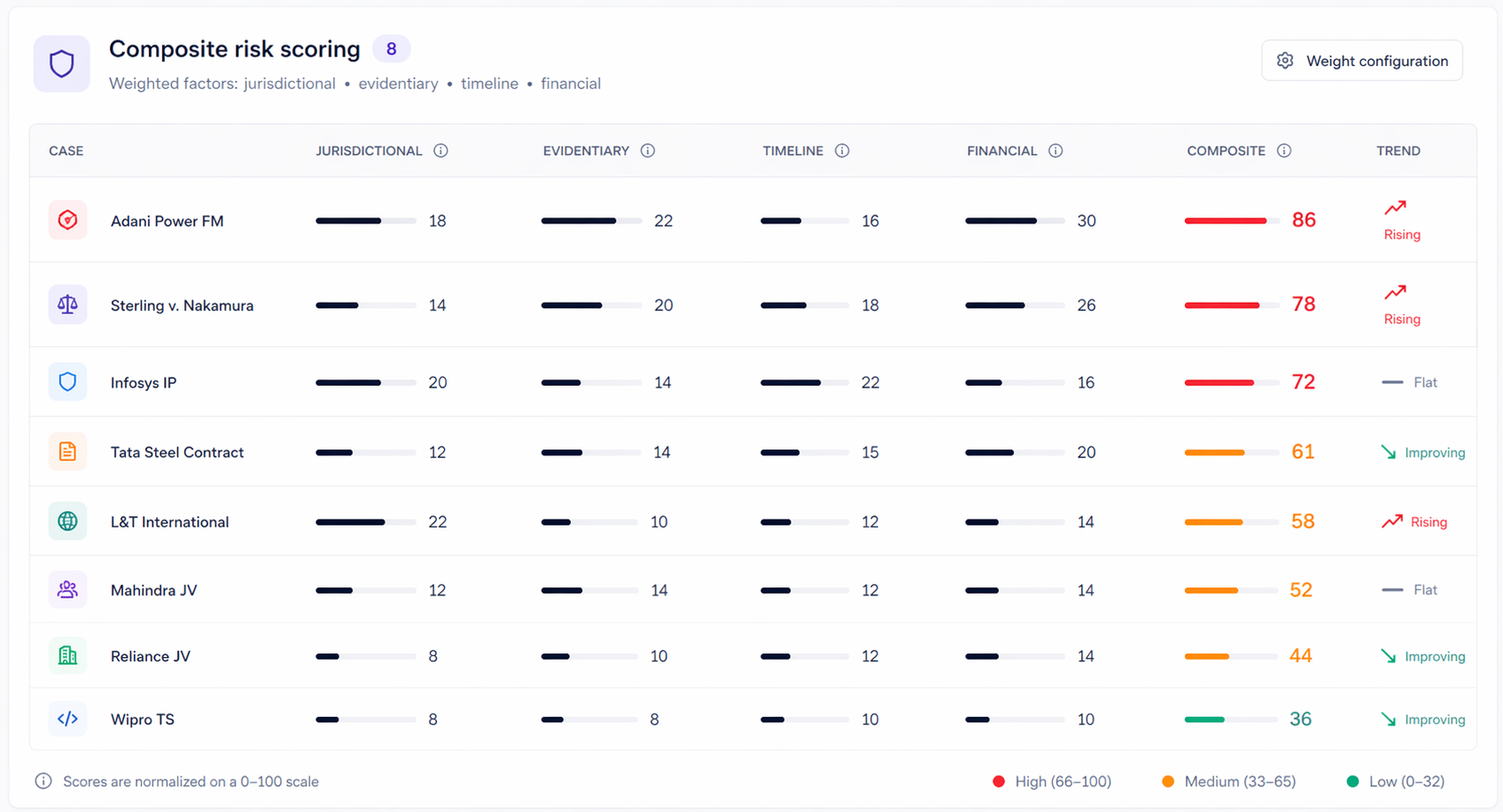
Good mediators and good counsel come to the table with a worked-through view of the zone of agreement. JudicialMind builds that view (BATNA, WATNA, reservation price bands, precedent settlements in comparable matters) and the reasoning behind each.
It doesn't tell you what will settle. It shows you where the room is, where it isn't, and what additional facts would widen it. You bring the judgment; it does the preparation.
- BATNA / WATNA and reservation-price modelling
- Settlement-zone framing and comparable analysis
- Opening statement drafts and caucus briefs
- Confidential party-specific memos without cross-leakage
For arbitrators who actually read the record.
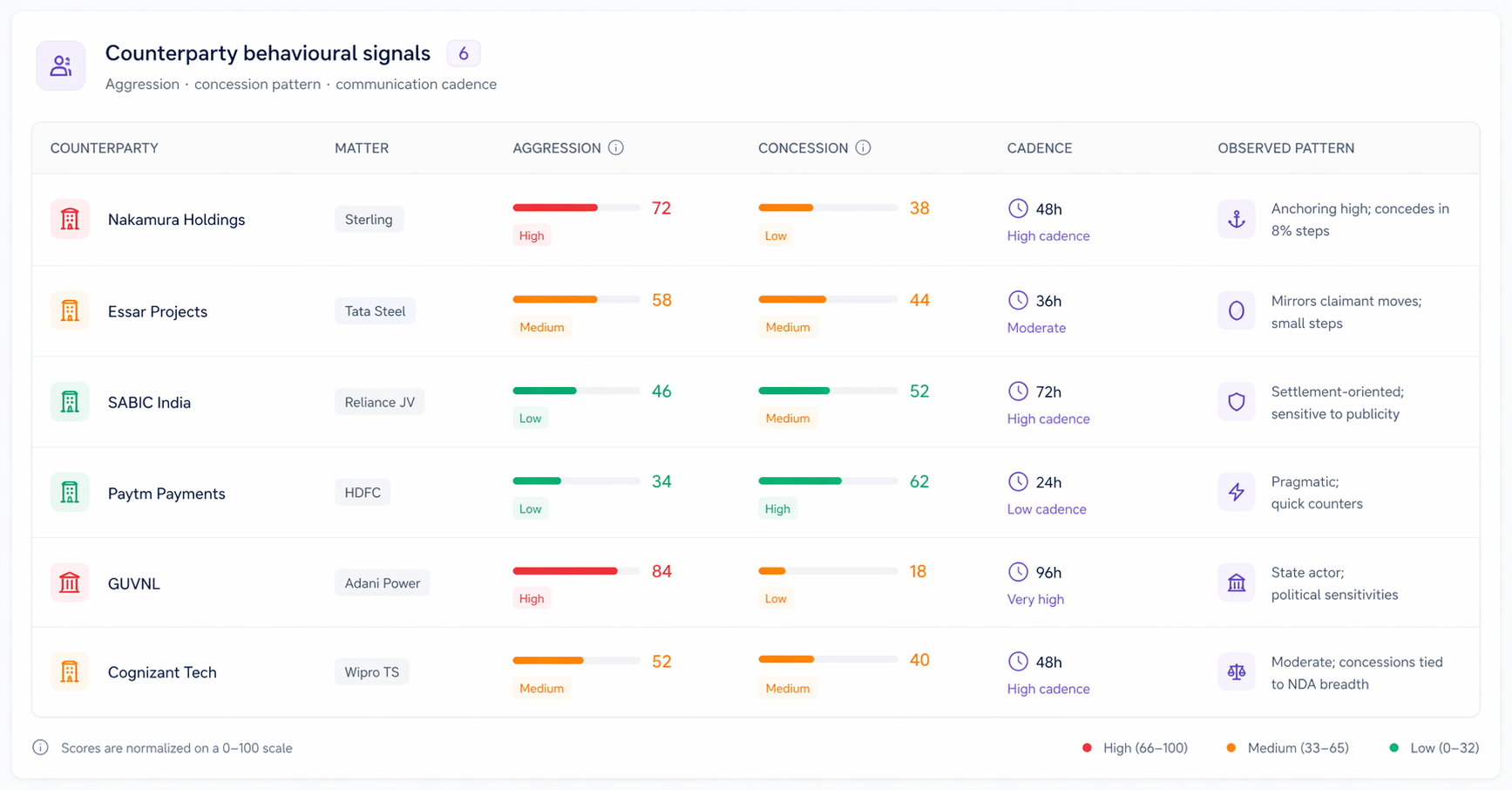
Sole arbitrators and tribunals get a workbench that treats the record as the record. Submissions indexed by issue. Authorities checked for currency. Procedural orders drafted against the timetable. Award drafting with full authority mapping and deliberation notes kept private to the tribunal.
Nothing shortcuts the deliberation. Everything that can be organised, is.
- Record indexing by issue and party
- Procedural order drafting against institutional rules
- Award drafting with authority mapping
- Private deliberation space with role-scoped access
Before you challenge or enforce, understand.
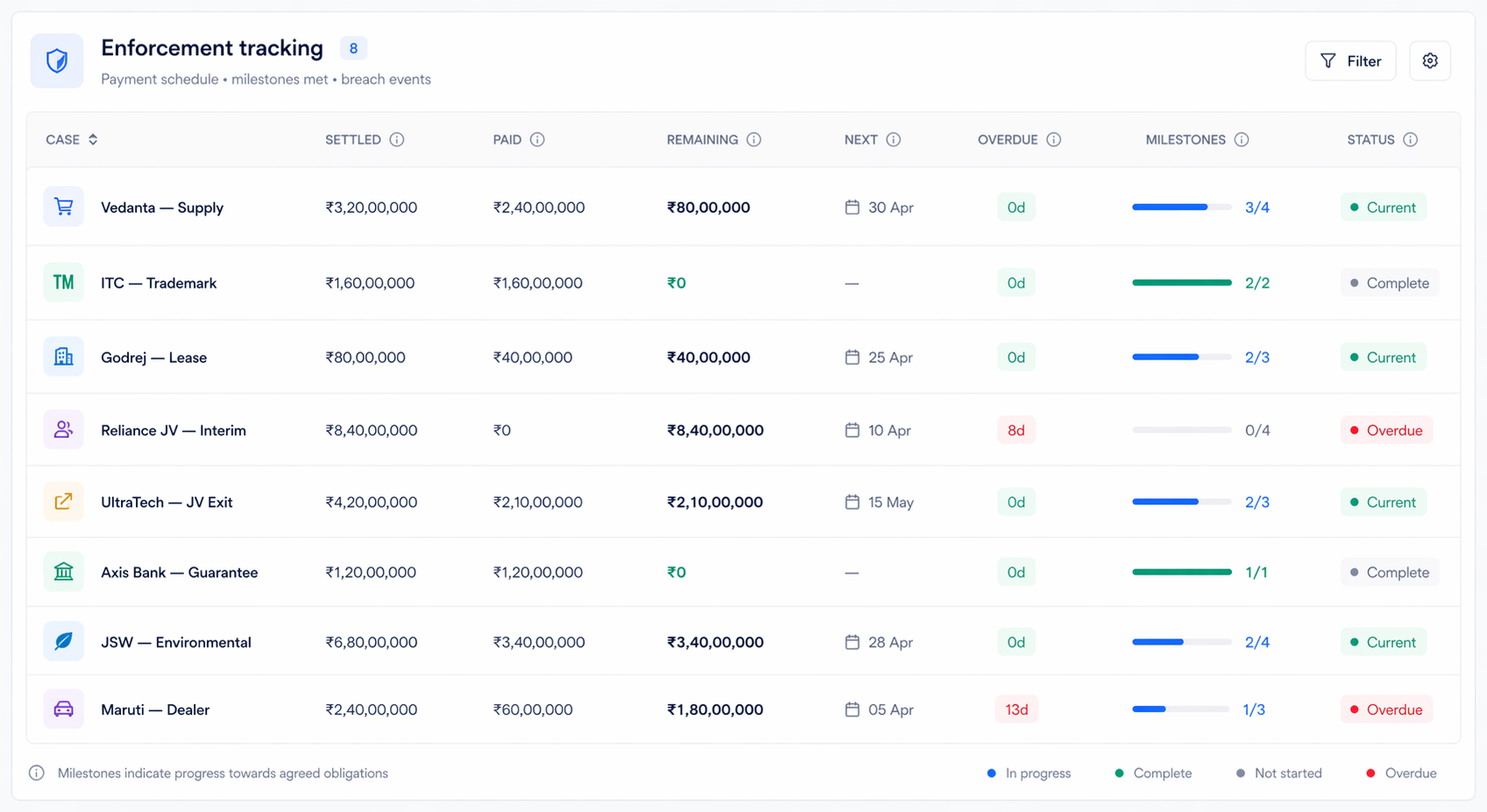
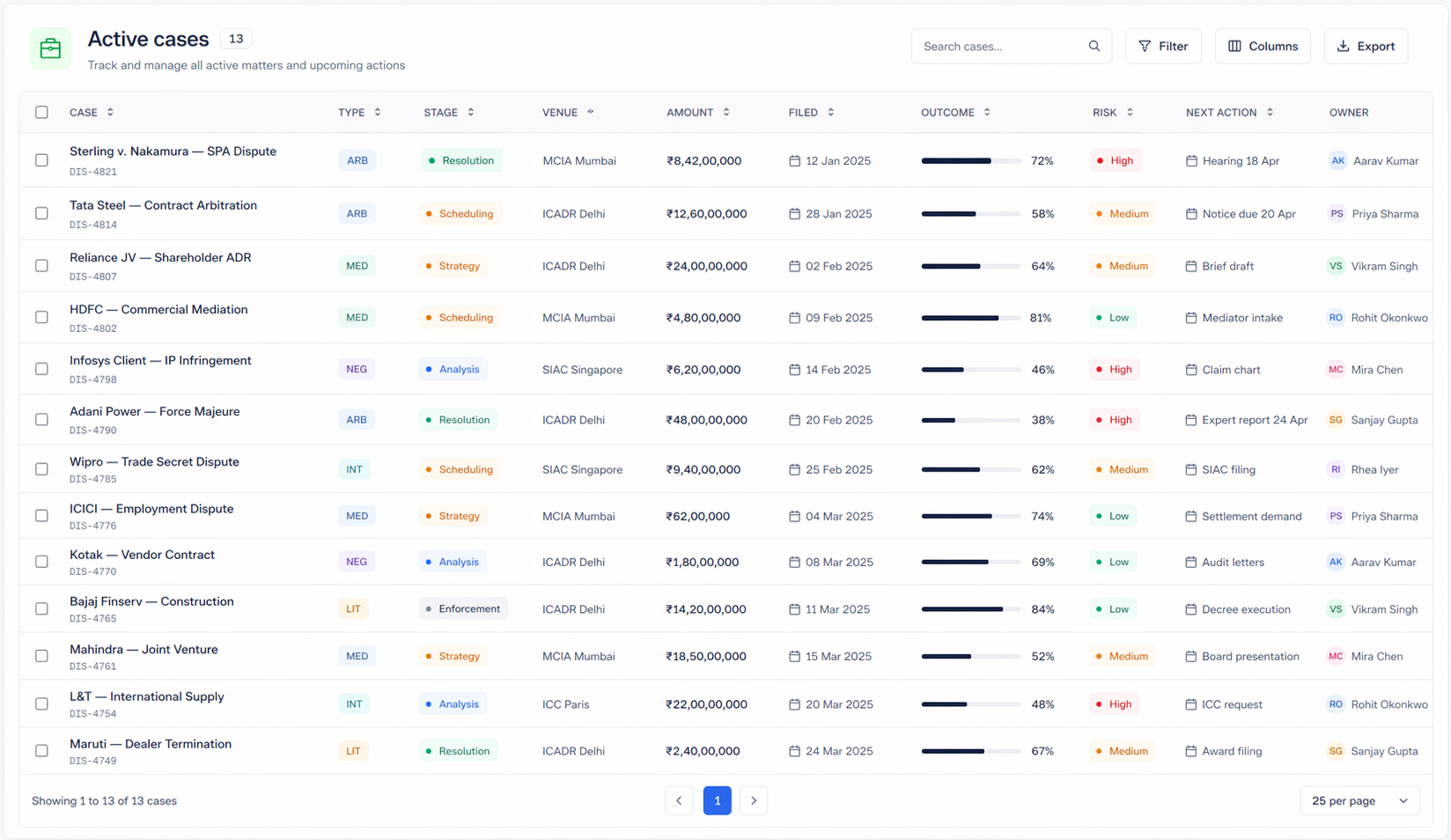
Awards aren't the end of the work. JudicialMind supports annulment analysis, set-aside review and enforcement mapping under the New York and ICSID Conventions. Risk of refusal grounds surfaced, comparable outcomes retrieved, enforcement jurisdiction comparisons laid out.
You still make the call. You make it with the map drawn.
- Set-aside and annulment grounds analysis
- New York Convention enforcement mapping
- Comparable-outcome retrieval and risk framing
- Cross-jurisdiction enforcement pathway comparison
What changes
What changes when ADR work runs on JudicialMind.
Less time spent assembling the record and building authority grids.
Faster first drafts of memorials, procedural orders and award sections.
Citation-anchored pleadings, memos and drafts. Every assertion traceable to authority or record.
Governed surface for the whole tribunal, party team, or mediation. Replaces scattered email and shared drives.
Figures reflect typical ranges observed across deployments; actual results depend on matter mix, team maturity and rollout scope. We baseline and measure against your current process, not a marketing average.
How it's built
Composed from the JudicialMind platform.
This solution is assembled from the same product layers every JudicialMind customer runs on. You get the full depth of the platform, tuned to a specific practice profile.
The underlying workspace for litigation, arbitration and contentious matters.
Specialist agents, case simulation and panels that stress-test arbitration theories.
Matters, playbooks and governance that route arbitration work through your team.
Online dispute resolution for consumer, fintech and high-volume platform disputes.
Questions we get
Frequently asked.
No. It is a preparation and record-management layer for the human decision-makers. Awards, procedural orders, memorials and settlement agreements carry the signatures they have always carried. The system supports judgment; it does not replace it.
Matter data lives in the party or tribunal tenant. Confidential caucus memos in mediation are scoped to the relevant side and not shared with the other. Tribunal deliberation spaces are private to the tribunal. Nothing is used to train shared models.
ICC, LCIA, SIAC, HKIAC, ICSID, AAA/ICDR, JAMS, UNCITRAL, CIArb and major domestic regimes are configured out of the box. Additional rulebooks are added during onboarding for specialist institutions.
Yes. Independent arbitrator accounts exist with scoped tribunal workspaces, private deliberation space, and full record-management features. No firm tenancy required.
No. Institutional platforms remain the registry of record. JudicialMind is the workbench where counsel, tribunals or mediators actually do the preparation and drafting work.
Every authority and record citation is anchored to a retrievable source. Unsupportable assertions are flagged rather than written. The citation audit trail travels with the document into review.
They cannot share a matter. Ethics and confidentiality prevent that. Each side operates in its own tenant. The tribunal, where applicable, operates in its own tribunal workspace.
Yes. Technical and damages experts can structure their reports against the tribunal's issues list, cross-check authorities and align assumptions with the record. The expert's voice stays theirs.
Bring the preparation up to the standard of the forum.
Whether you're building a memorial, chairing a tribunal, or preparing a mediation, keep the record clean, the citations honest, and the reasoning reviewable. Book a walkthrough tailored to your institution.