Solution · ODR
Online dispute resolution,
at platform scale.
An ODR layer for marketplaces, fintechs, insurers, and public-facing services. Triage, negotiate, and resolve high-volume disputes. Human oversight on judgment calls. Full audit trail on every outcome.
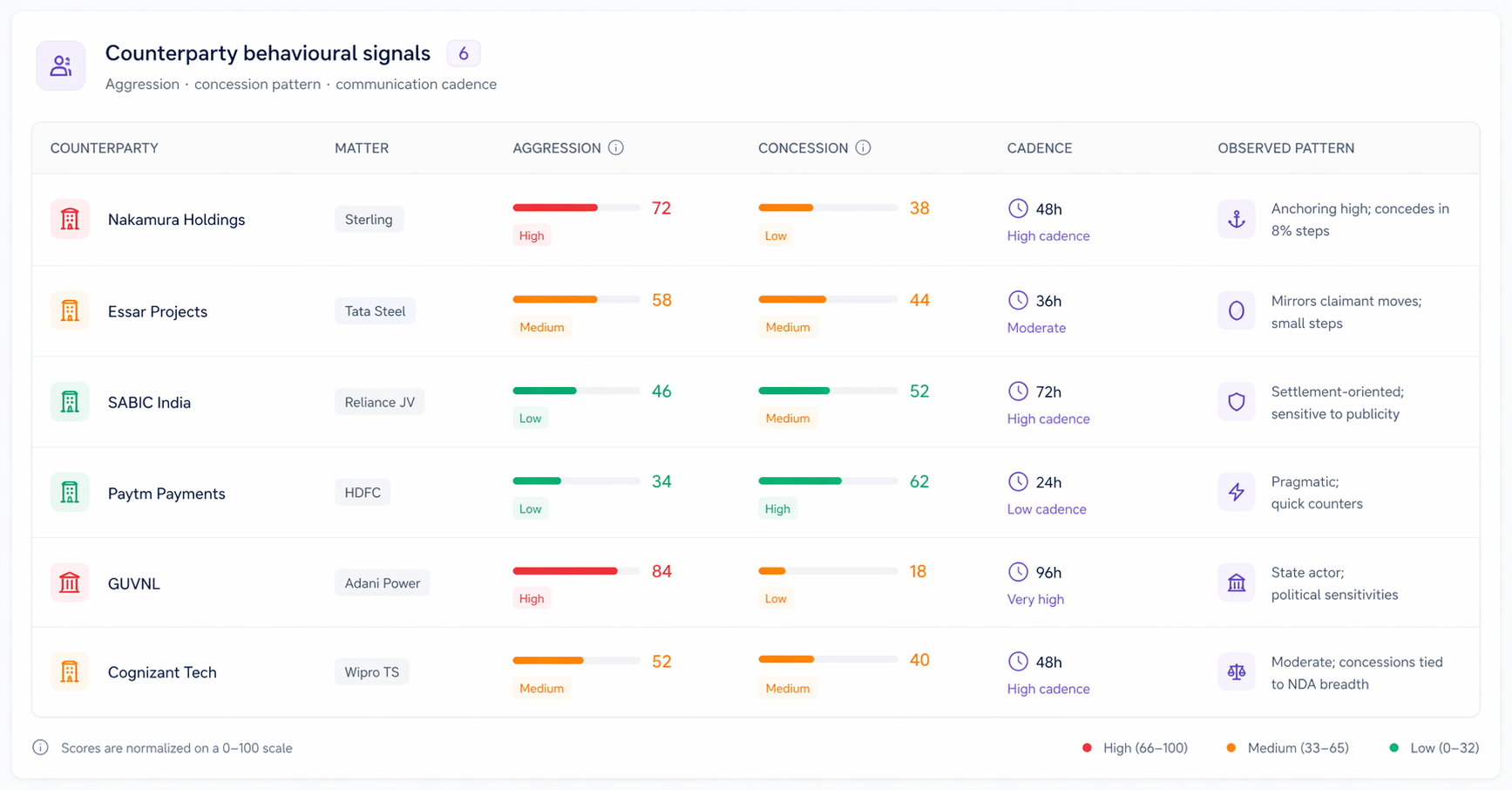
The volume
Volume breaks traditional dispute teams. It doesn't have to break yours.
Marketplaces, payments, insurance, and public portals share one problem: thousands of disputes a week, each one deserving a fair hearing, none affordable at the cost of a court.
Traditional ODR automates form-filling. We automate the reasoning around the form. Intake classification, policy matching, counter-offer generation, and escalation paths inside a governed workflow your team owns.
Who this is for
Built for platforms that can't scale a trial for every complaint.
Two-sided platforms handling buyer–seller disputes across goods, services, hospitality and gig work.
Card networks, wallets and BNPL providers running chargeback, reversal and fraud dispute queues under regulatory timelines.
Claims dispute workflows across auto, home, travel, and health, where consistency, fairness, and speed all matter.
Billing and service dispute operations with regulator-mandated resolution windows and reporting.
Consumer protection bodies, ombuds services and government-sponsored ODR programmes.
Content, listing and policy-violation disputes that need fairness, escalation and appeal discipline.
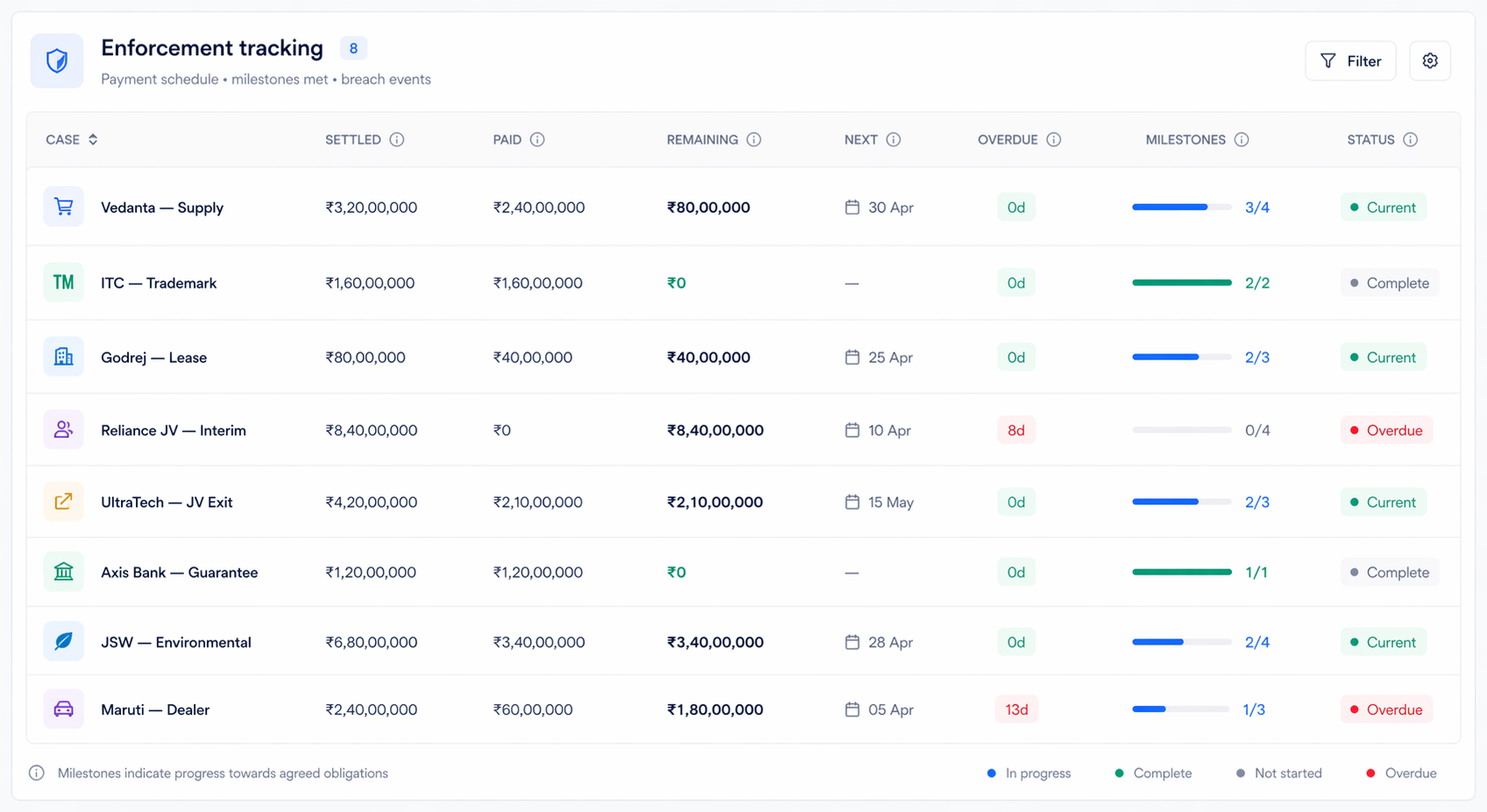
Every dispute classified and routed in seconds.
Disputes arrive as free-form complaints. JudicialMind reads them, classifies the dispute type against your policy taxonomy, extracts the material facts, and routes the matter to the right queue: consumer-facing auto-resolution, human review, escalated panel, or external tribunal.
What's stripped out at intake is the ambiguity; what's preserved is the full original complaint, for fairness and audit.
- Policy-taxonomy classification and routing
- Fact extraction and evidence collation
- Duplicate and bad-faith signal detection
- Priority and SLA assignment
Resolve the clear ones. Escalate the hard ones.
Many disputes have clear answers under policy. Lost package, duplicate charge, documented refund eligibility. JudicialMind resolves those against your playbook, with proposed resolution, citation to the relevant policy clause, and a check on whether both parties have accepted.
Hard cases escalate automatically. Judgment calls land with humans. The boundary between auto and human is yours to set and audit.
- Playbook-governed resolution proposals
- Policy-clause citation on every outcome
- Configurable auto-resolution thresholds
- Human-in-the-loop escalation rules
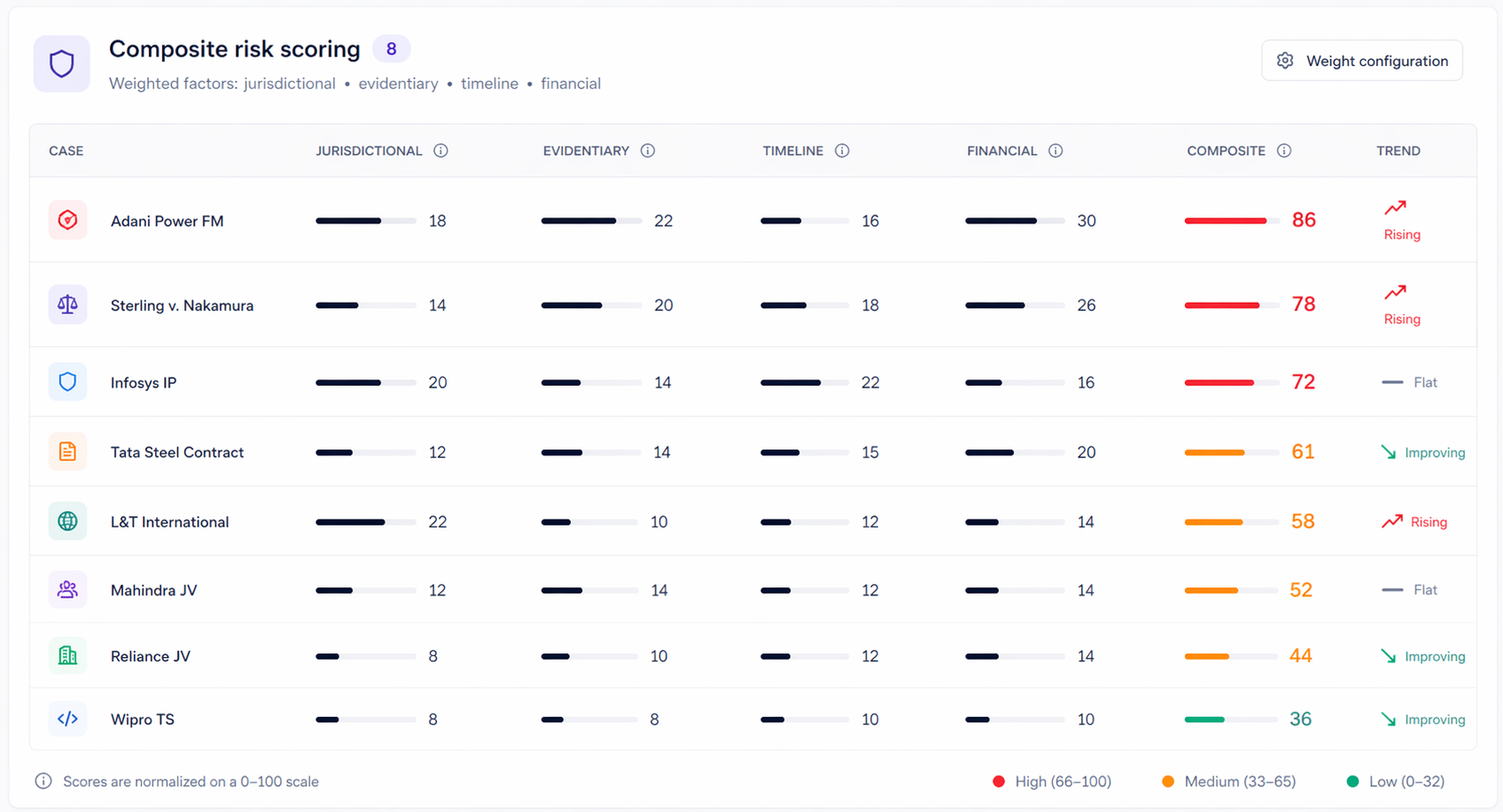
The hard middle: disputes that need a deal.
Some disputes aren't factually unclear; they're about the deal. Partial refunds, replacement-versus-credit choices, goodwill zones. JudicialMind runs structured negotiation flows: frame the zone, surface options, capture acceptance, close the matter.
It doesn't push a position on a party. It reduces the friction to reaching one.
- Zone-of-agreement framing from policy and precedent
- Structured option generation for both parties
- Counter-offer handling with ceiling and floor guardrails
- Clean settlement capture and enforceable acceptance record
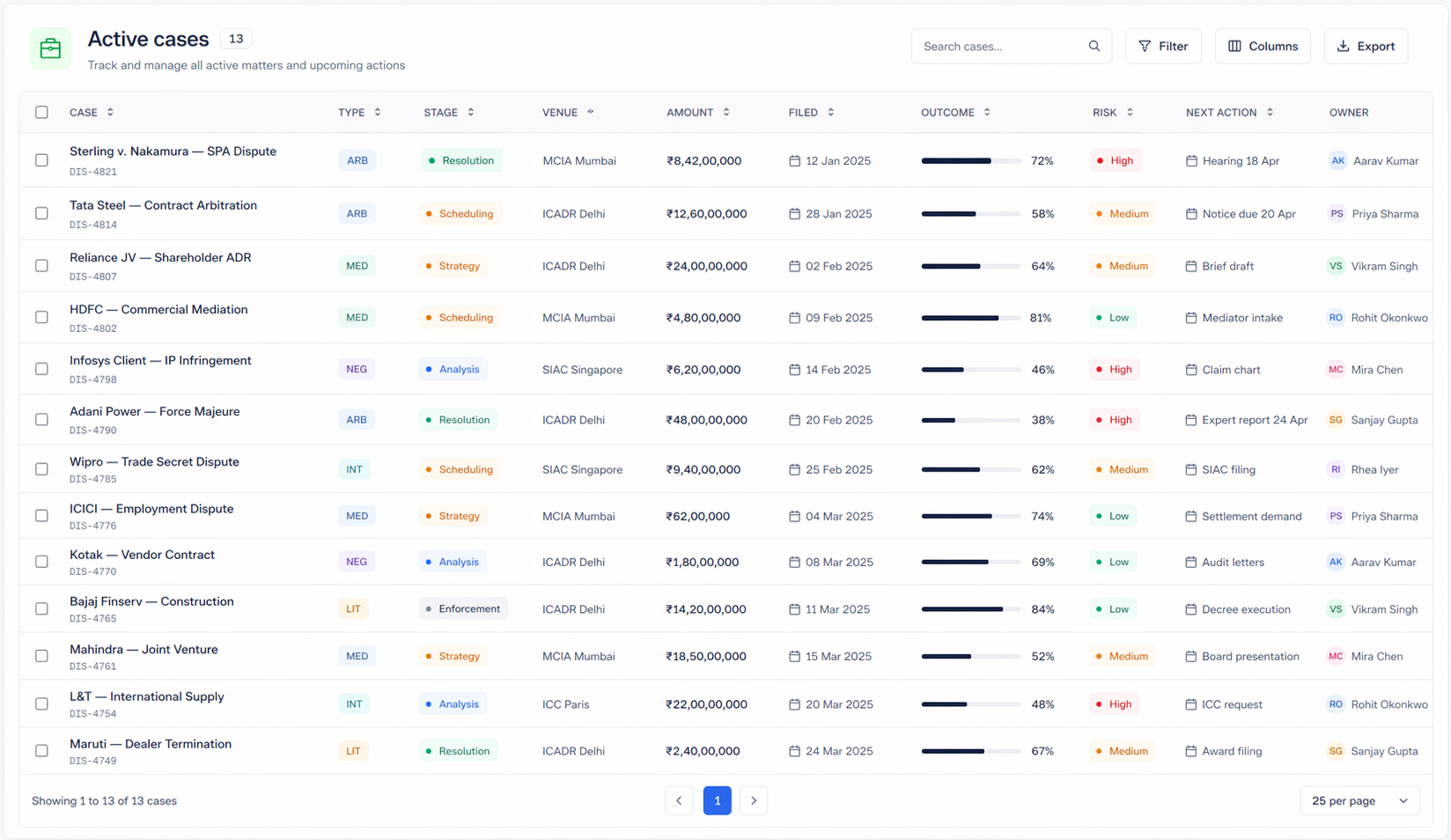
Regulators will ask. Have the answer ready.
Every decision carries the policy it was resolved under, the human approval that signed off, and the full chain of evidence considered. Disparate-outcome monitoring runs across protected dimensions where your jurisdiction requires it.
When a regulator or ombuds walks in, the record is the record. No reconstruction exercise. No missing emails.
- Decision and approval audit trail
- Disparate-outcome and fairness monitoring
- Policy-version tracking (what rule resolved which dispute)
- Export-ready regulator and ombuds reporting
What changes
What changes when ODR runs on JudicialMind.
Share of clear-cut disputes resolved without human review, with policy citations.
Reduction in time-to-resolution across consumer, payments and insurance portfolios.
Audit-ready outcomes. Every resolution cites the policy and records the approval.
Continuous dispute operations, with human escalation paths that respect time zones and SLAs.
Figures reflect typical ranges observed across deployments; actual results depend on matter mix, team maturity and rollout scope. We baseline and measure against your current process, not a marketing average.
How it's built
Composed from the JudicialMind platform.
This solution is assembled from the same product layers every JudicialMind customer runs on. You get the full depth of the platform, tuned to a specific practice profile.
The underlying dispute workspace behind ADR, ODR and litigation workflows.
Playbooks and automation that govern high-volume resolution workflows.
Reasoning layer that makes the classification and negotiation logic reviewable.
Arbitration and mediation, for disputes that need a tribunal, not a queue.
Questions we get
Frequently asked.
Only within the auto-resolution bands you define and only where the policy answer is clear. Everything beyond that threshold is routed to a human. You set the boundary; the system holds it.
Recognition varies by jurisdiction and subject matter. JudicialMind is typically deployed as a first-instance layer inside existing contractual or regulatory ODR regimes, with human review on bindingness and appeal paths preserved. We help you structure deployment to fit your regulatory environment.
Every resolution cites the policy clause it relied on. Outcome-distribution monitoring flags disparate-impact patterns across configurable dimensions. Audit exports let fairness teams sample and review outcomes. Policy and playbook changes are versioned.
Yes. Disputants see a plain-language explanation of the resolution, the policy it rested on, and the appeal path available to them. Internal deliberation detail is scoped to the operations team.
JudicialMind integrates with standard CRMs and case-management systems via APIs and events, writing dispositions and audit data back to your system of record. It is not meant to replace your CRM.
Enterprise deployments support dedicated tenancy and, where required, private-cloud or on-premise options. Data residency and regulatory isolation requirements are addressed during architecture review.
Every auto-resolution carries a visible appeal path into human review. Human-reviewed outcomes carry escalation into your defined dispute-resolution hierarchy or external ADR body.
Typical baselines include time-to-resolution, auto-resolution share, reopen rate, regulator complaint rate, and customer-satisfaction after resolution. We baseline before deployment and measure against the same workflow after.
Scale the fairness. Not the overhead.
At thousands of disputes a week, the question isn't whether to automate. It's whether the automation is governed, explainable, and auditable. Book a walkthrough mapped to your policy set.