Solution · Solo Practitioners
The bench a solo practice
could never afford. Until now.
The same intelligence layer a large firm runs on, priced for a one-person practice. Research, drafting, disputes, contracts, deposition prep. No associates to hire. No enterprise seats to justify.
The gap
The bar is set by the court, not by your headcount.
A solo competes against firms with ten associates. The judge doesn't grade on staffing. The brief has to be as good, the deposition as prepared, the contract as tight.
That gap used to be measured in people. Now it closes with a reasoning layer that staffs itself. Usable on day one, not after a six-month rollout.
Who this is for
Made for the practice you actually run.
Family, estates, real estate, small business, and civil matters, where breadth matters and research time is the constraint.
Appellate specialists and research contractors where citation discipline and brief quality are the whole product.
Contract-heavy practices where consistency across a client's documents drives client retention.
Civil and commercial litigators handling deposition prep, motion practice and trial preparation without associate support.
Two- to five-lawyer firms that want partner-quality leverage without the cost of junior associates or staff paralegals.
Lawyers working with multiple firms who need a portable research and drafting platform that travels between engagements.
A research partner who reads everything overnight.
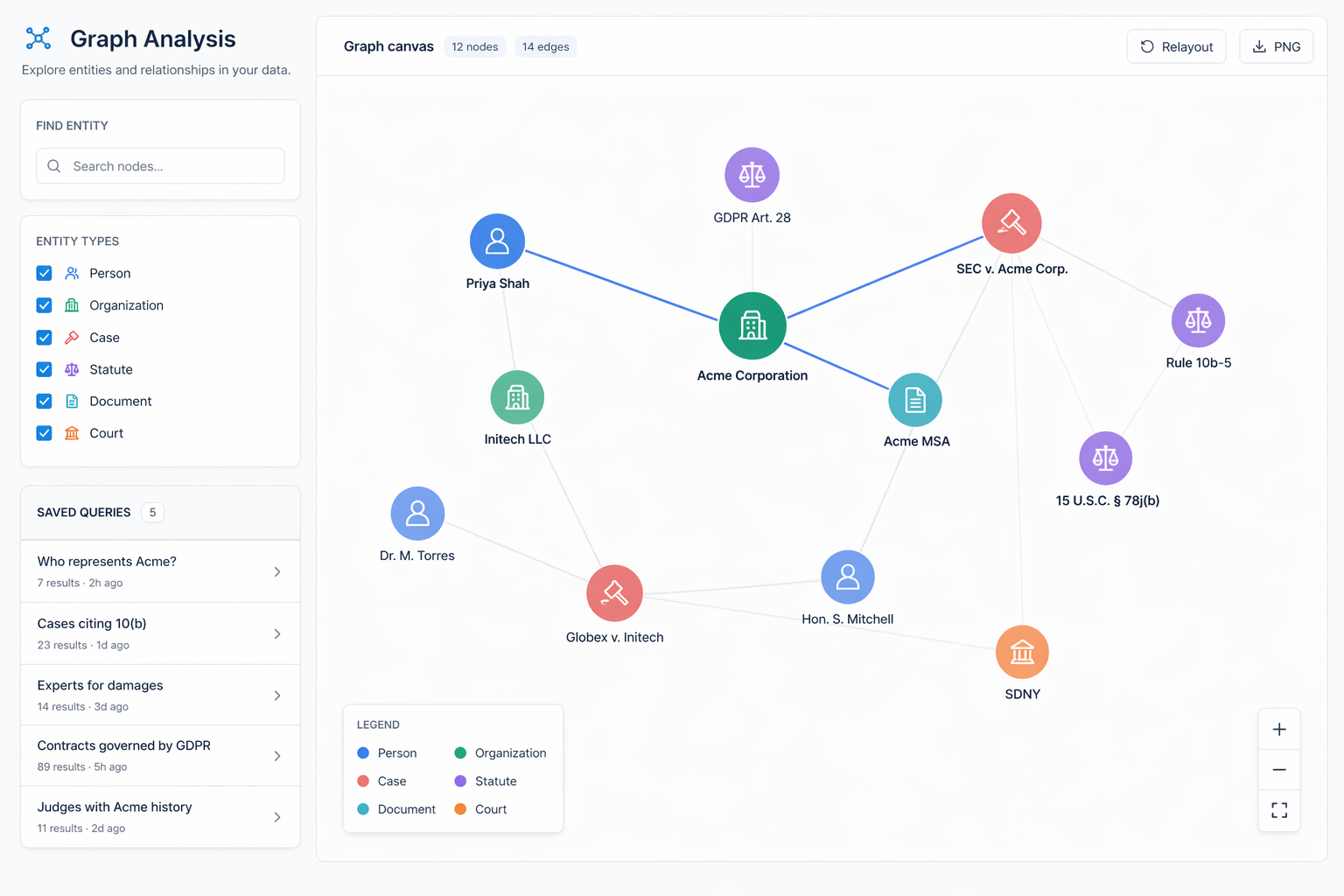
Ask a real question. Get an answer that reads like an associate memo, with a chain of authorities, jurisdictional scope, and a plain statement of what the law doesn't clearly say.
No scrollable list of links. No 'here are 40 cases'. The point of research is an answer you can put in a brief, with citations you'd sign your name under.
- Jurisdiction-aware primary and secondary authority
- Memo-form answers, not search results
- Pinpoint citations, every time
- Explicit uncertainty where the law is unsettled
First drafts in an hour. Final drafts still yours.
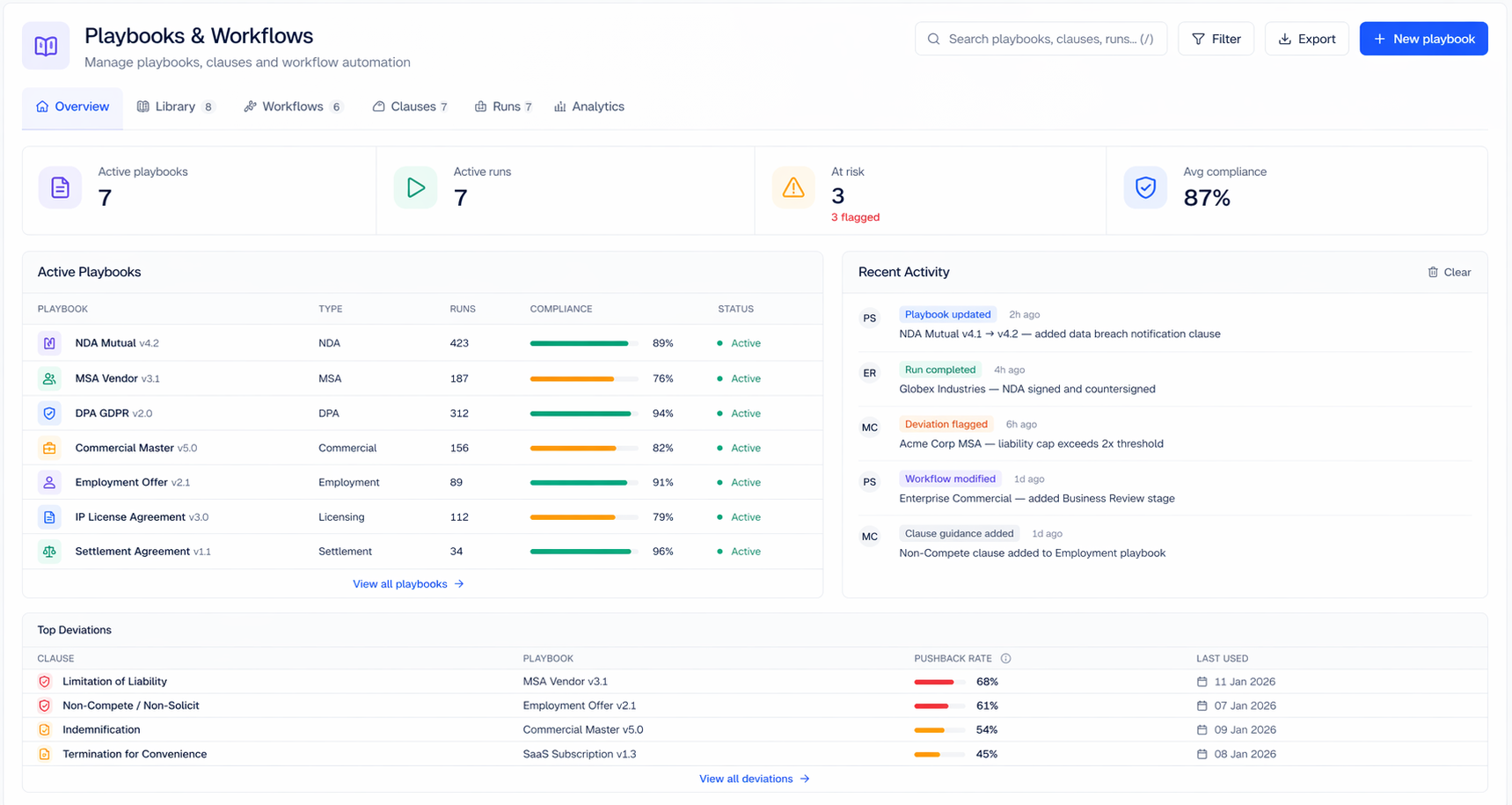
Motions, briefs, demand letters, contracts, wills, leases. The system drafts from your playbook, your templates, and your tone. Not from a generic library that sounds like nobody.
You edit the argument, not the typos. You keep the voice. You ship.
- Drafts from your own templates and prior work
- Consistent voice across client documents
- Inline authorities and record cites
- Redline and track-change flows you already use
The prep a small firm usually can't afford to do.
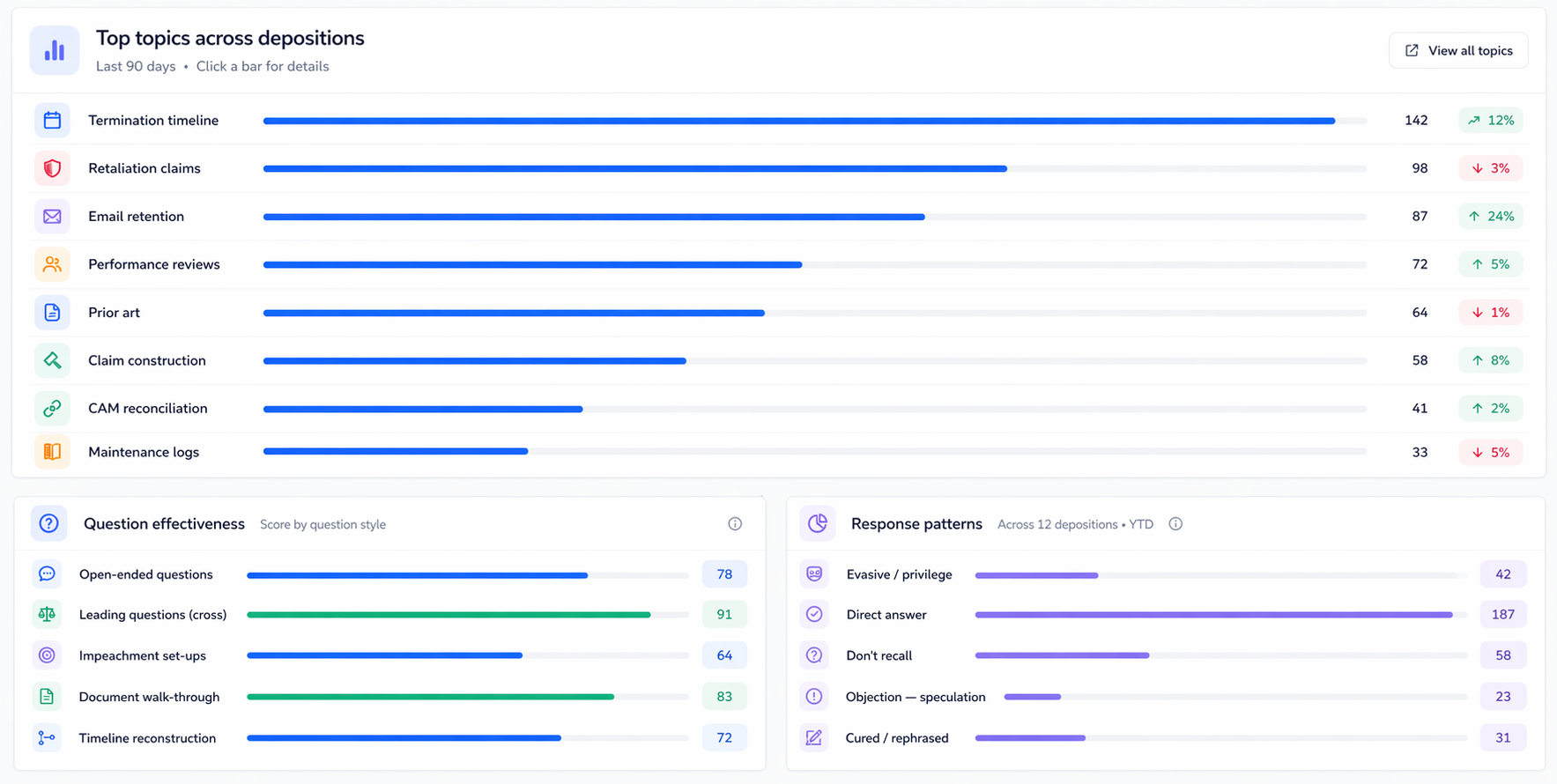
Upload the documents, the transcripts, the exhibits. JudicialMind builds a witness-by-witness map: prior statements, inconsistencies, exhibit linkage, suggested question arcs. You walk in with the preparation that used to require a team.
Every proposed question is anchored to where the record supports it. You decide what to ask.
- Witness chronology and inconsistency mapping
- Exhibit linkage across the record
- Cross-examination arcs drafted to source material
- Bench-book style trial prep binders
Intake, matters, time, and client work. One surface.
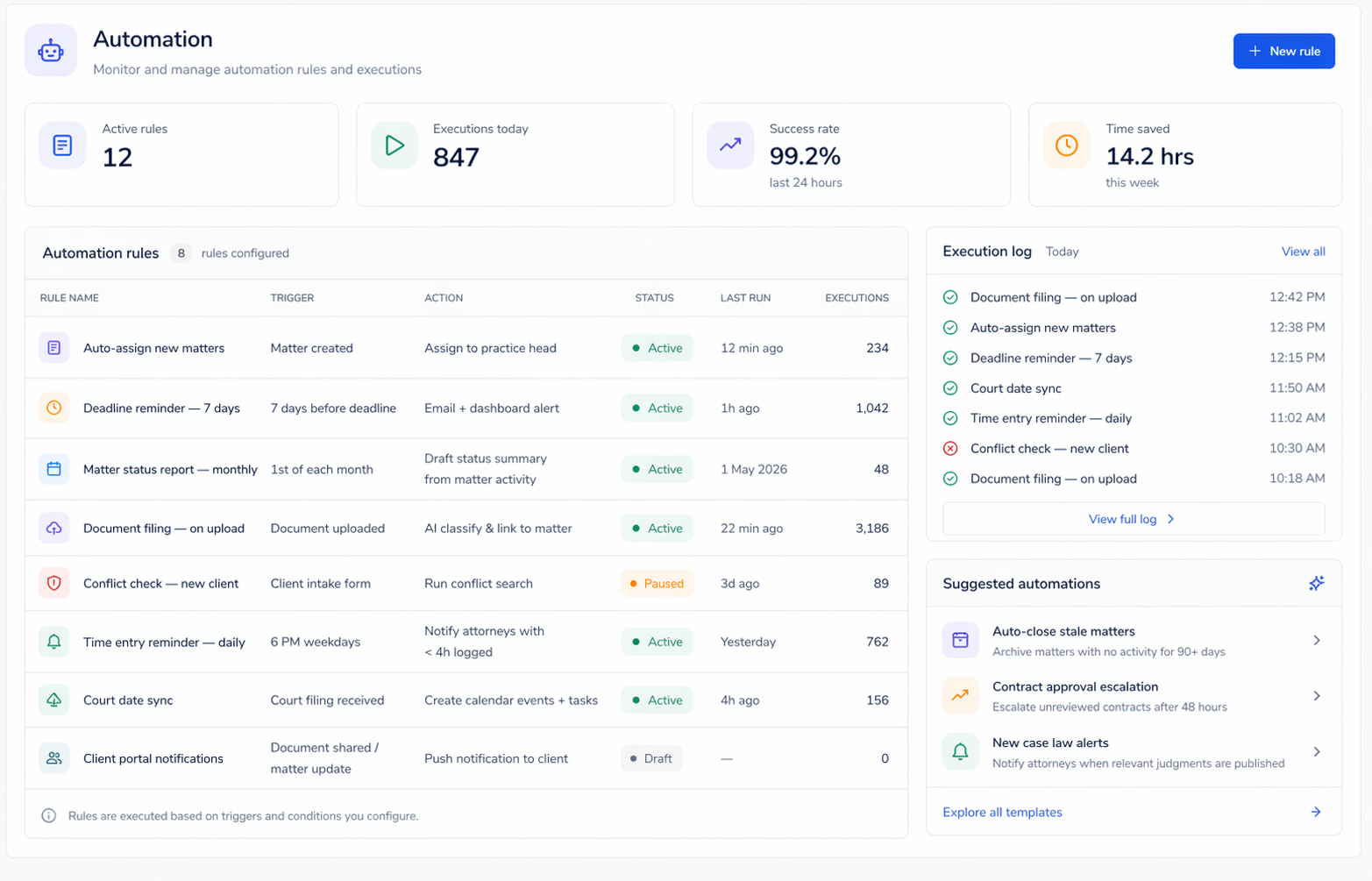
Solos lose hours to switching: intake form here, docs there, time-keeping somewhere else. JudicialMind keeps matter, documents, research, playbooks and communications in one governed space. Time capture happens where the work happens.
You still own the client relationship. You just stop re-entering the same information four times a day.
- Matter-centric workspace with roles and permissions
- Client intake and conflict checks
- Contextual time capture on the actual work
- Document management with version control
What changes
What changes when you run a solo practice on JudicialMind.
Hours per week returned by eliminating research, drafting and prep overhead.
Matters a solo can meaningfully carry without losing quality or missing deadlines.
Citation-anchored briefs and memos. Nothing goes out uncheckable.
Surface for matters, documents, research, drafting, and prep. Replaces six tools you maintain yourself.
Figures reflect typical ranges observed across deployments; actual results depend on matter mix, team maturity and rollout scope. We baseline and measure against your current process, not a marketing average.
How it's built
Composed from the JudicialMind platform.
This solution is assembled from the same product layers every JudicialMind customer runs on. You get the full depth of the platform, tuned to a specific practice profile.
Matters, playbooks and document automation designed for real practice.
The reasoning engine behind every answer, draft and prep session.
Litigation and contentious matter workflows when the matter turns contentious.
For solos handling trademarks, patents or mixed IP matters at portfolio scale.
Questions we get
Frequently asked.
Solo plans are priced for a solo practice, not an enterprise seat count. Typical spend sits well below the cost of a contract paralegal and delivers a much wider capability set. We'll quote transparently against your practice profile.
Most solos are using research and drafting the first week and have their first matter fully running in JudicialMind inside two to three weeks. There's no six-month rollout.
No, but we recommend it. The system can start from your prior work or from a clean baseline. Your voice and template library improve the outputs quickly once loaded.
Coverage is strong across core common-law and civil-law jurisdictions, including state-level variation in the US. For specialised forums and unusual jurisdictions, we'll confirm coverage before onboarding.
Client material lives in your tenant. It isn't used to train shared models. Privilege and confidentiality assumptions are preserved, the same way your DMS preserves them.
JudicialMind is designed around the principles most bars articulate: supervision, verification, confidentiality, competence, and candour. Every output is reviewable, every citation checkable, and the lawyer remains the responsible party. We can share model disclosure language during onboarding.
Workspaces can be scoped by engagement so that work done for one firm doesn't bleed into another. The platform is designed for lawyers who move between representations.
Many solos reduce spend on those while keeping a minimal subscription; some replace them entirely. We recommend running in parallel for the first engagement so you can compare outputs on the same matters.
Practice like you have a firm behind you.
Take the kind of matter you used to refer out. Do it well, on time, without losing a weekend. Book a walkthrough and we'll run it on your own matter type.