Solution · AI-Native Legal Firms
Build the AI-native law firm.
We provide the reasoning layer.
The intelligence layer, exposed as an API. Build AI-native practices, in-product legal experiences, and embedded workflows on a grounded, citation-anchored reasoning stack. Skip rebuilding the foundations.
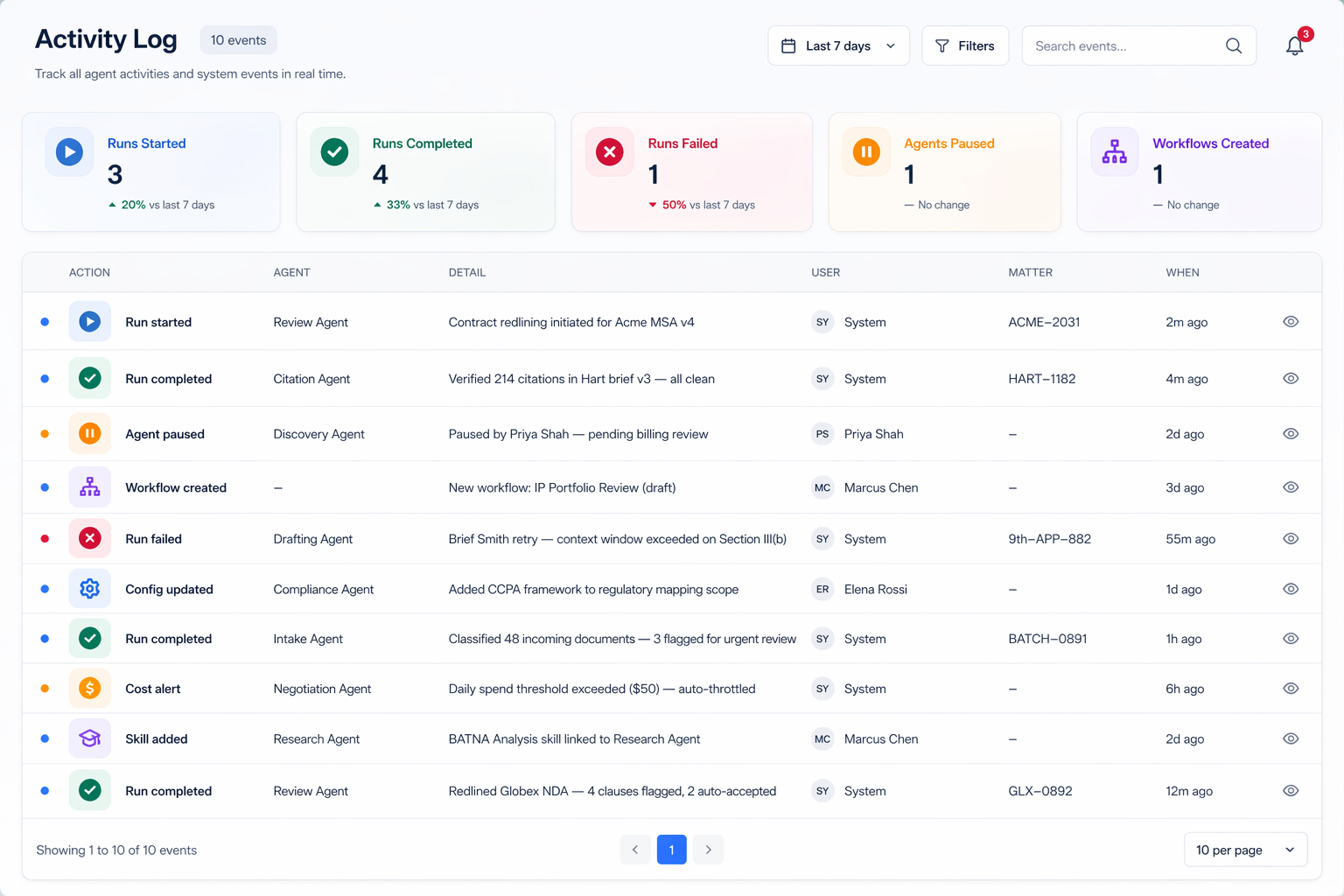
The shift
The new tier of legal firms ship product, not just memos.
They aren't a 1995 firm with a ChatGPT plugin. They build products: consumer apps, SMB tools, legal workflows embedded inside procurement, HR, and marketplaces. The lawyer shows up as software, with human oversight where the regulator demands it.
Every one of those products needs the same capability underneath: a grounded reasoning layer. Retrieve authority, apply it, draft with citations, flag uncertainty. Build on our API instead of rebuilding the stack and maintaining it forever.
Who this is for
The firms and teams shipping legal products.
Firms that monetise software-delivered legal services alongside traditional representation, with a product roadmap as real as the matter roster.
Startups and scale-ups building contract, compliance, litigation or IP products that need a grounded reasoning layer under the UI.
Product teams inside marketplaces, fintechs, HR platforms and SaaS companies embedding legal workflows directly into their users' experience.
ALSPs running managed services at scale (review, monitoring, intake, triage) where a reasoning API replaces a ladder of annotators.
Civic and regulatory tech teams surfacing the law to citizens, businesses and agencies with fidelity the subject matter demands.
Consulting firms and system integrators delivering AI-native legal solutions for enterprise clients on top of a production-grade reasoning API.
Legal answers, with citations, over HTTPS.
Send a question, a jurisdiction, and a scope. Get back a structured answer with cited authorities, pinpoint references, and an explicit uncertainty signal when the law isn't clear. Streamed, batched, or synchronous, depending on your product's shape.
You keep your product experience. We handle the reasoning, the retrieval and the quality floor.
- Synchronous and streaming reasoning endpoints
- Jurisdiction-scoped retrieval with authority citations
- Structured uncertainty and confidence signals
- SDKs for TypeScript, Python, and REST everywhere else
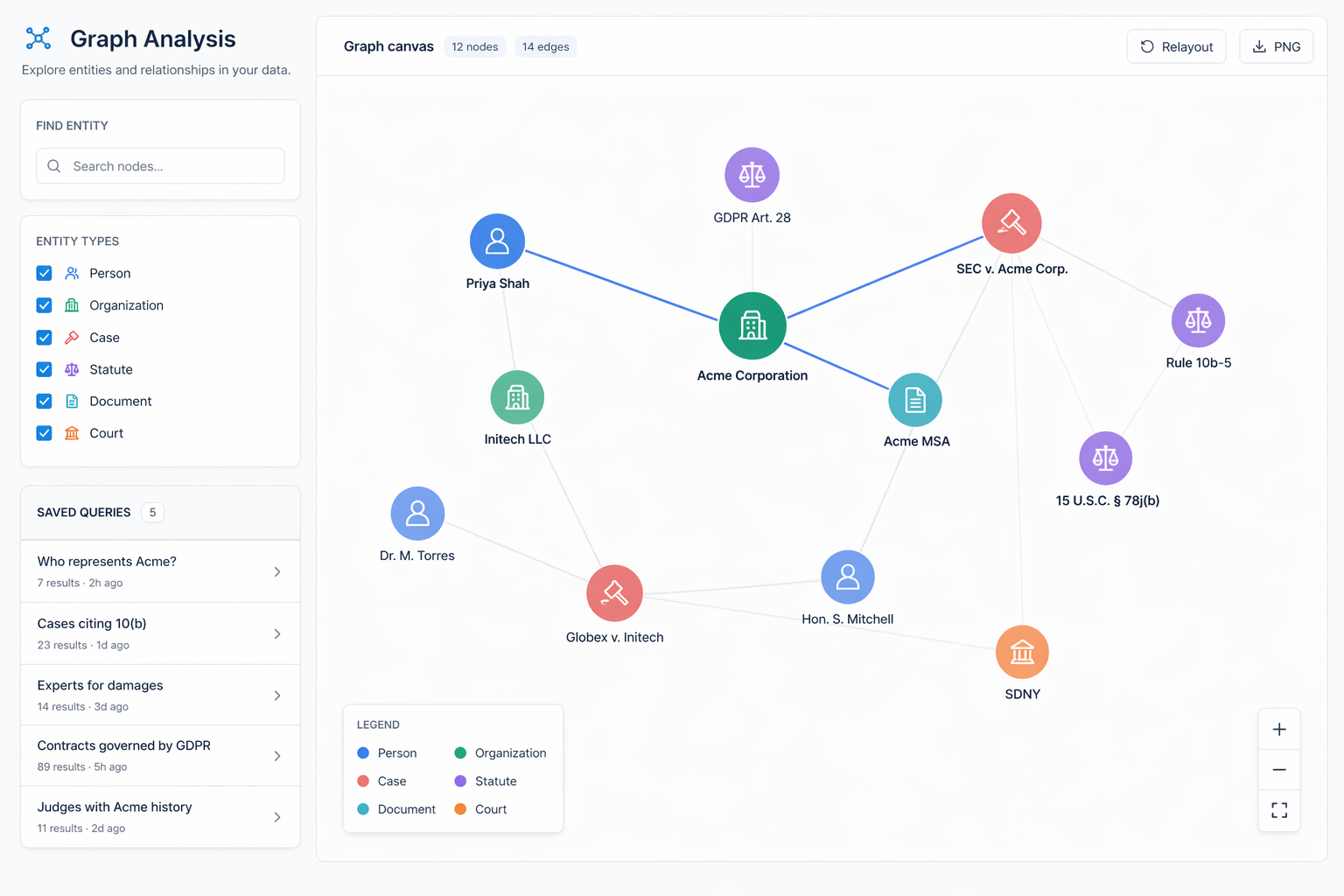
Orchestrate specialists, not prompts.
Invoke scoped specialist Agents (contract reviewer, regulatory researcher, dispute triager, deposition summariser) via API. Compose them into workflows that match your product's shape. Queue them, monitor them, capture their outputs.
Behind the API, they're doing real legal work with real review gates. In front of the API, you ship the product your users actually want.
- Named specialist agents with scoped capabilities
- Multi-step workflow orchestration and state management
- Webhook events for long-running investigations
- Review-gate hooks for human-in-the-loop products
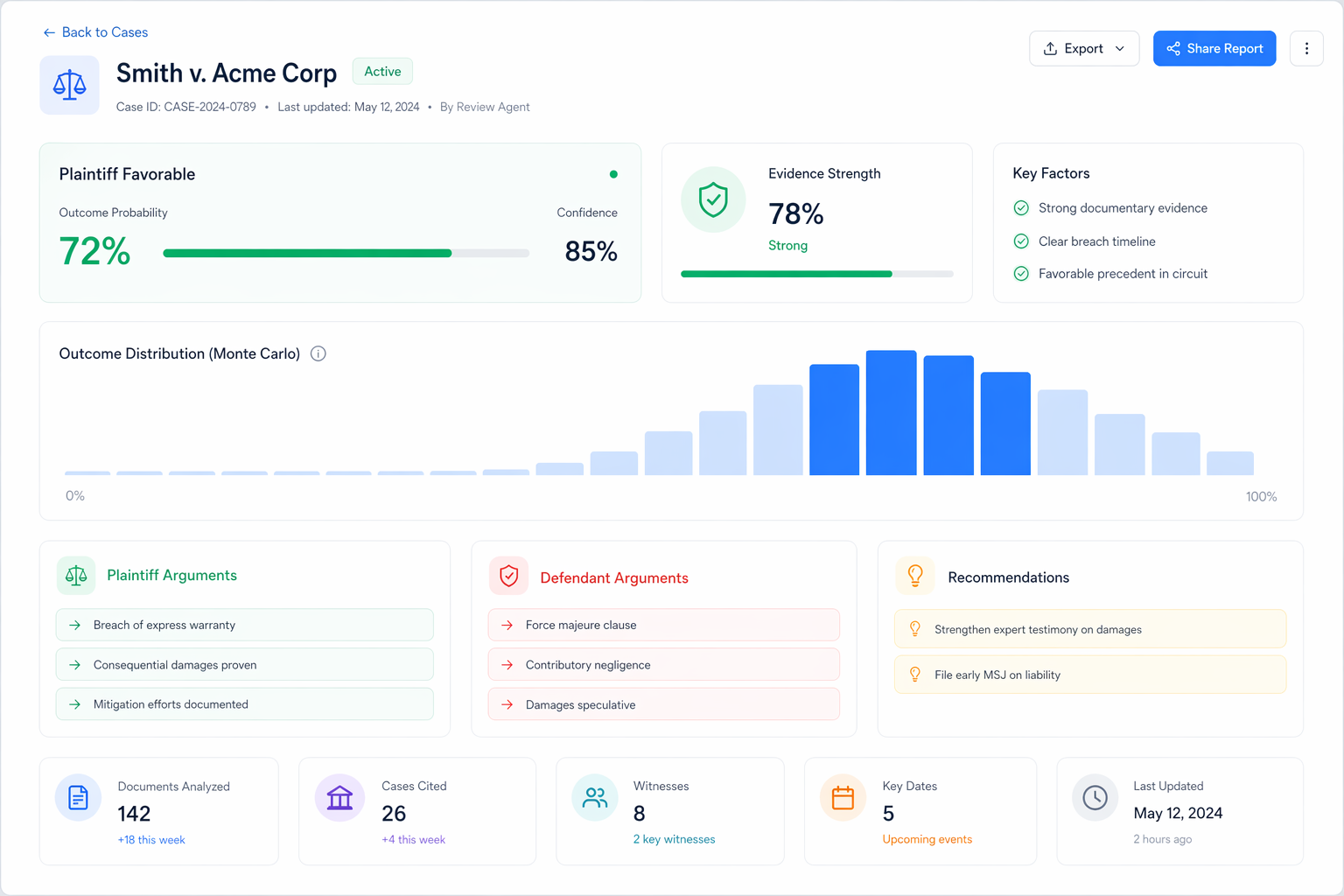
Contract, memo, and pleading drafting on your UX.
Feed in context (a matter, a template, a policy) and request a drafted artefact with full citation metadata. Redlines come back as structured diffs with rationales. Review feedback streams in the format your product wants to render.
No black-box generation. Every substantive claim carries the authority it rests on.
- Structured drafting endpoints (contract, memo, motion, letter)
- Redline-as-diff with rationales attached to each change
- Template-driven generation from your own precedent library
- Citation metadata as first-class output fields
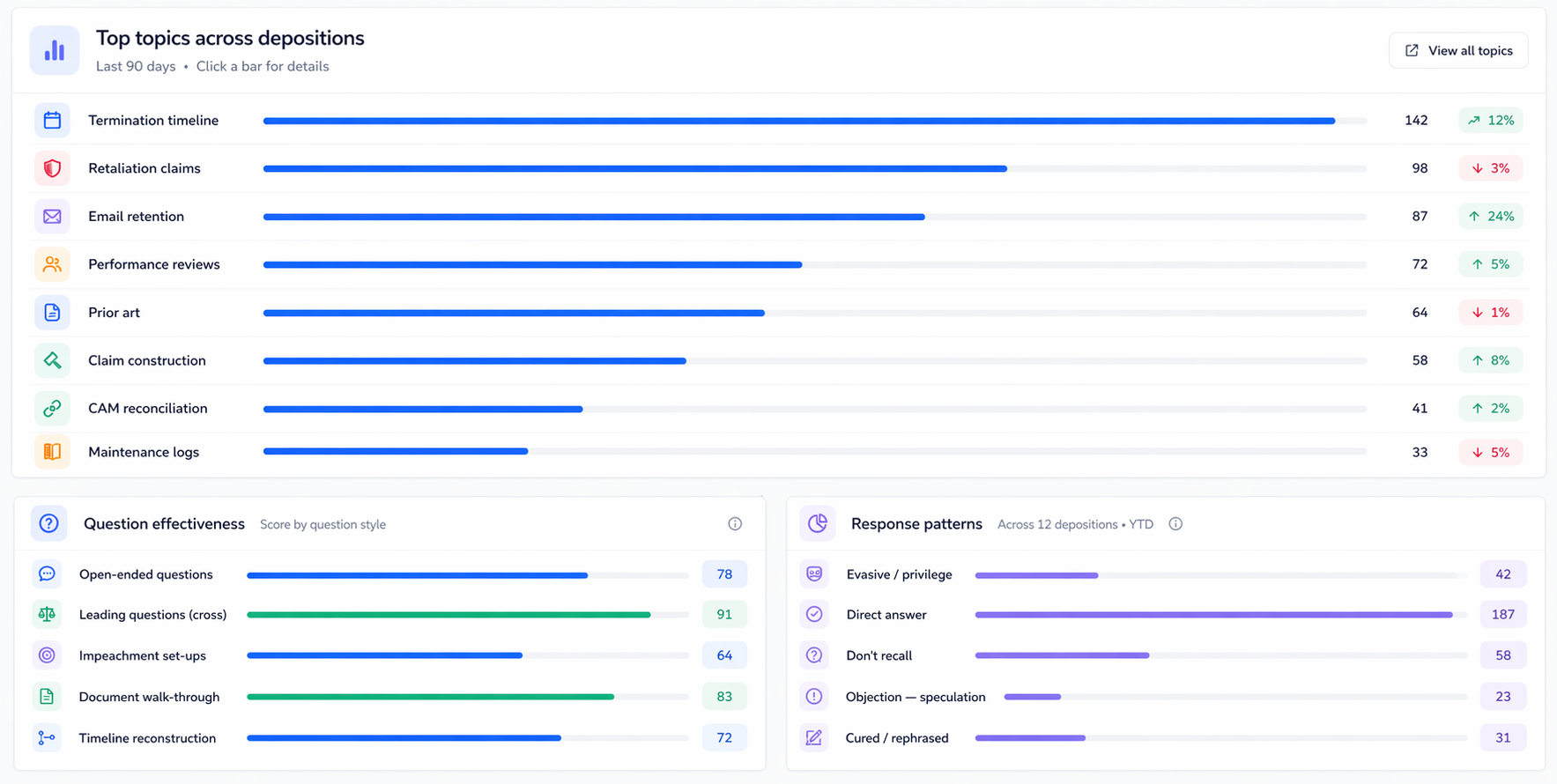
Built to be embedded. Built to be audited.
Tenant-per-customer isolation, per-call audit logs, configurable data residency and retention, rate-limiting, and quotas by tier. The API is designed for products that have their own customers, their own regulators, and their own trust story.
You own your end-user relationship. We don't touch it. We provide the reasoning; you provide the product.
- Multi-tenant architecture with customer-level isolation
- Per-call audit logs and exportable usage records
- Configurable data residency, retention and privacy controls
- Quotas, rate limits and enterprise SLAs
What changes
What changes when your product runs on JudicialMind.
Months of foundation work you don't have to ship, maintain or staff internally.
Citation-anchored outputs. The trust floor your regulators and enterprise buyers expect.
-per-customer isolation and audit log from day one. Not something you retrofit before SOC 2.
Product surface area. You focus on what your users care about. We keep the reasoning layer current.
Figures reflect typical ranges observed across deployments; actual results depend on matter mix, team maturity and rollout scope. We baseline and measure against your current process, not a marketing average.
How it's built
Composed from the JudicialMind platform.
This solution is assembled from the same product layers every JudicialMind customer runs on. You get the full depth of the platform, tuned to a specific practice profile.
The underlying reasoning product behind every API endpoint.
Matter, playbook, and workflow primitives, available directly or via API.
Dispute and litigation reasoning. The engine behind ODR and contentious-matter APIs.
IP-specific reasoning for products operating on patents, trademarks and portfolio data.
Questions we get
Frequently asked.
Yes. Enterprise API plans allow you to present the reasoning inside your own UX, with your brand on the end-user experience. You disclose the underlying engine to the extent your regulator or client contract requires; we don't force a 'powered by' in your UI.
Simple retrieval calls respond in a few hundred milliseconds. Structured reasoning and drafting endpoints stream progressive output within seconds. Long-running investigations and multi-step agent workflows use webhook callbacks so your product stays responsive.
Tiered pricing covers startup access, production workloads and enterprise deployments with committed use and custom SLAs. Pricing tracks against capability tier and volume, not seat count. We'll size to your product economics.
Your customers' data lives in an isolated tenant scoped to you, with optional per-customer sub-tenancy. It is not used to train shared models. Data residency and retention are configurable per deployment; BAAs and DPAs are available.
Enterprise deployments support private-cloud and VPC deployments where regulatory, customer or architectural requirements demand it. We scope this during architecture review.
Startup tiers run on shared limits; enterprise tiers support committed-capacity and SLA-backed availability. We publish the current performance profile to enterprise customers under NDA and include it in contractual SLAs.
Yes. The agent API supports custom specialists configured against your playbooks and policies. You define the role; we provide the reasoning primitives, retrieval surface and review discipline underneath.
JudicialMind is designed around the trust floor regulated legal products need: auditability, citation-anchored output, uncertainty signalling, and human-in-the-loop hooks. We work with customers on regulator-facing documentation for their specific jurisdiction and product shape.
Ship the AI-native firm. We'll carry the reasoning stack.
Inside a firm, a startup, or embedded in another company's platform, don't rebuild the reasoning layer. Talk to our API team and we'll match the surface to your product roadmap.